1944 — what we know, what we are looking for
A house damaged in Normandy in the summer of 1944 is nothing exceptional. What is more so is being able to say precisely what happened there — and we cannot yet.
The sector was violently contested, and the house bears the marks of it
The photographs kept in the estate’s history room show the main house with its roof caved in, a wing reduced to its walls, the corner of the château torn open, stone and sheet metal in a collapsed room.
In one of them, in the middle of the rubble, the wrought-iron staircase is still standing — the very one the notary of 1926 described, eleven years earlier, in the first line of his notice.
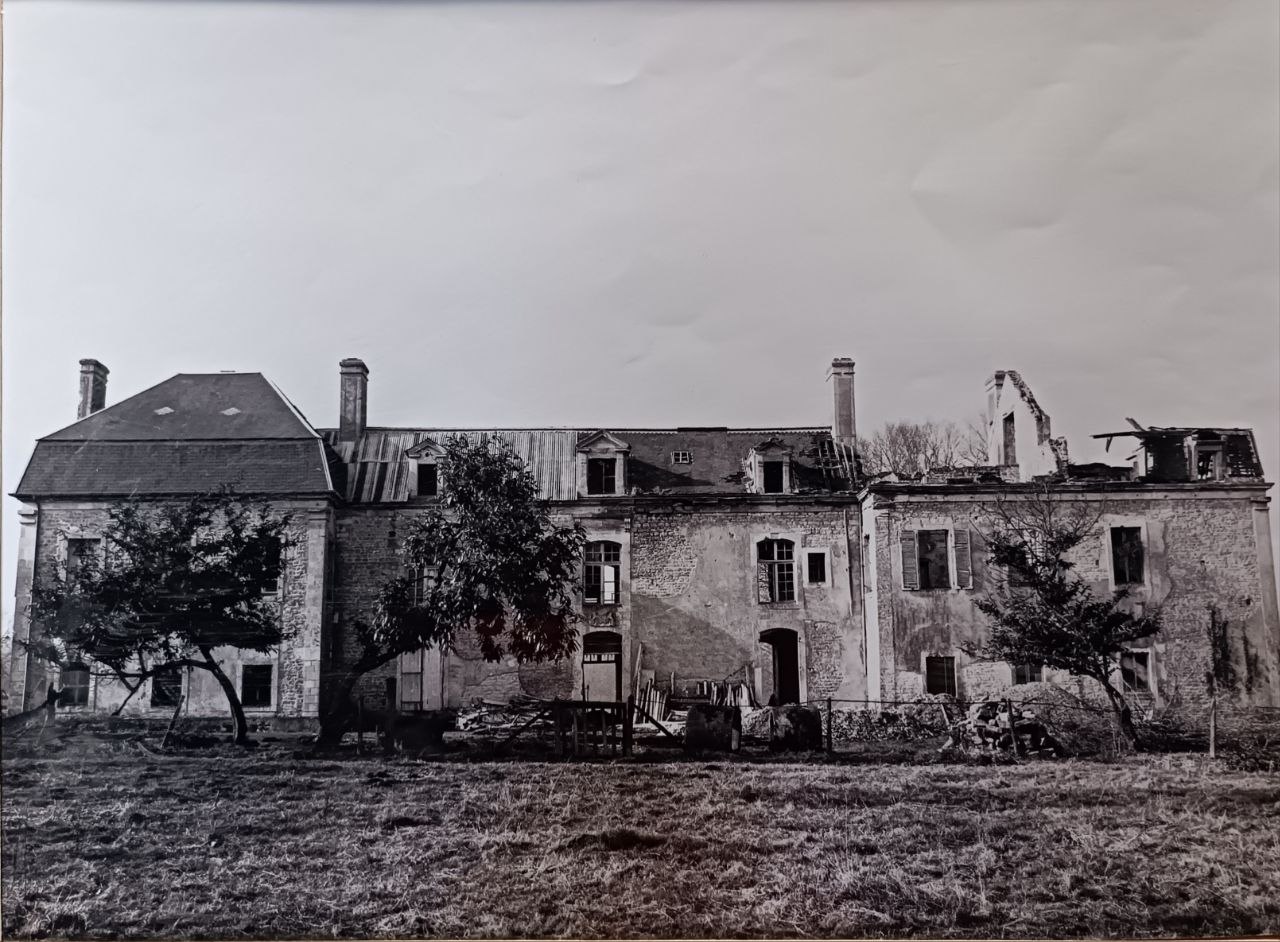
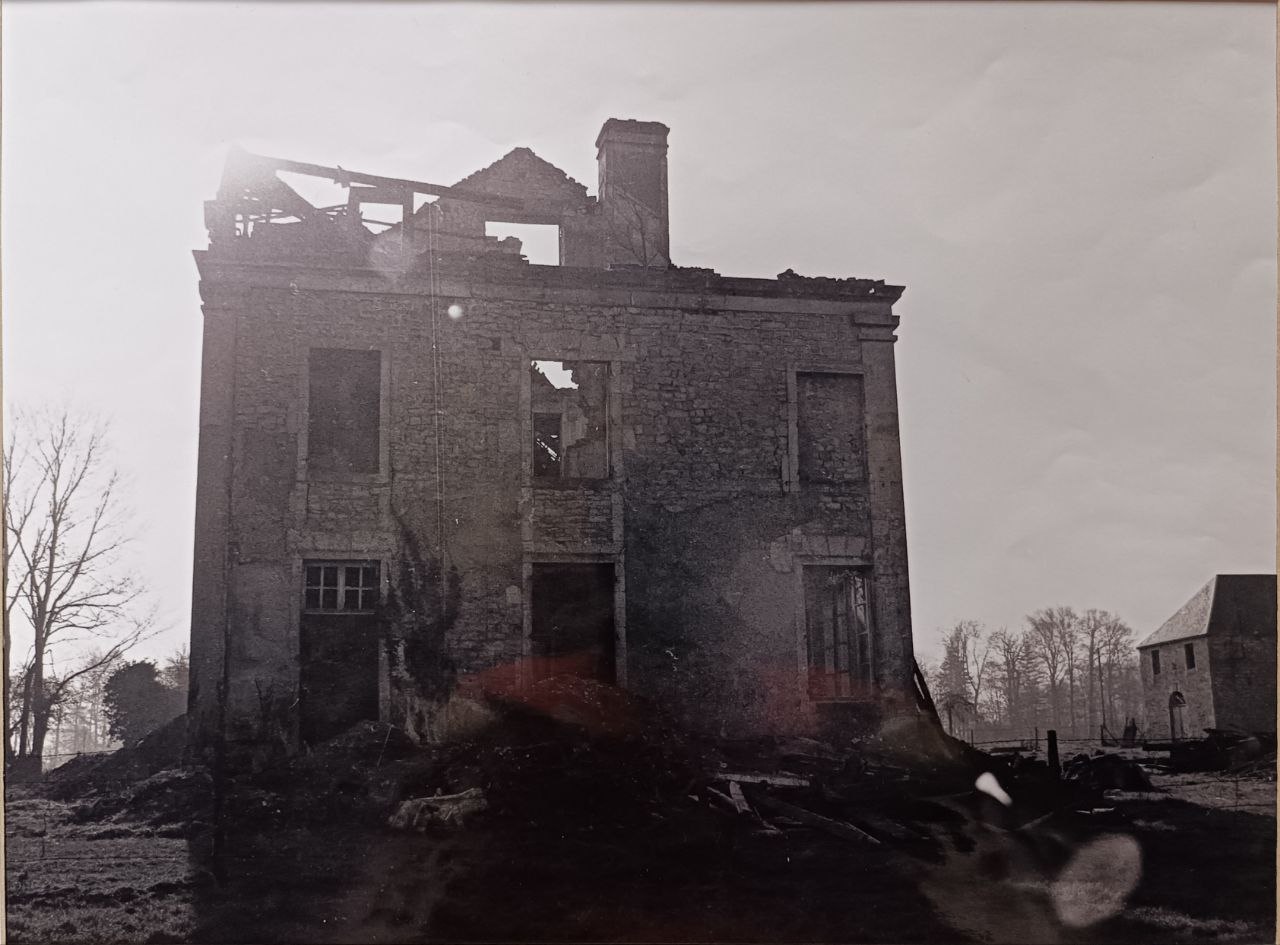
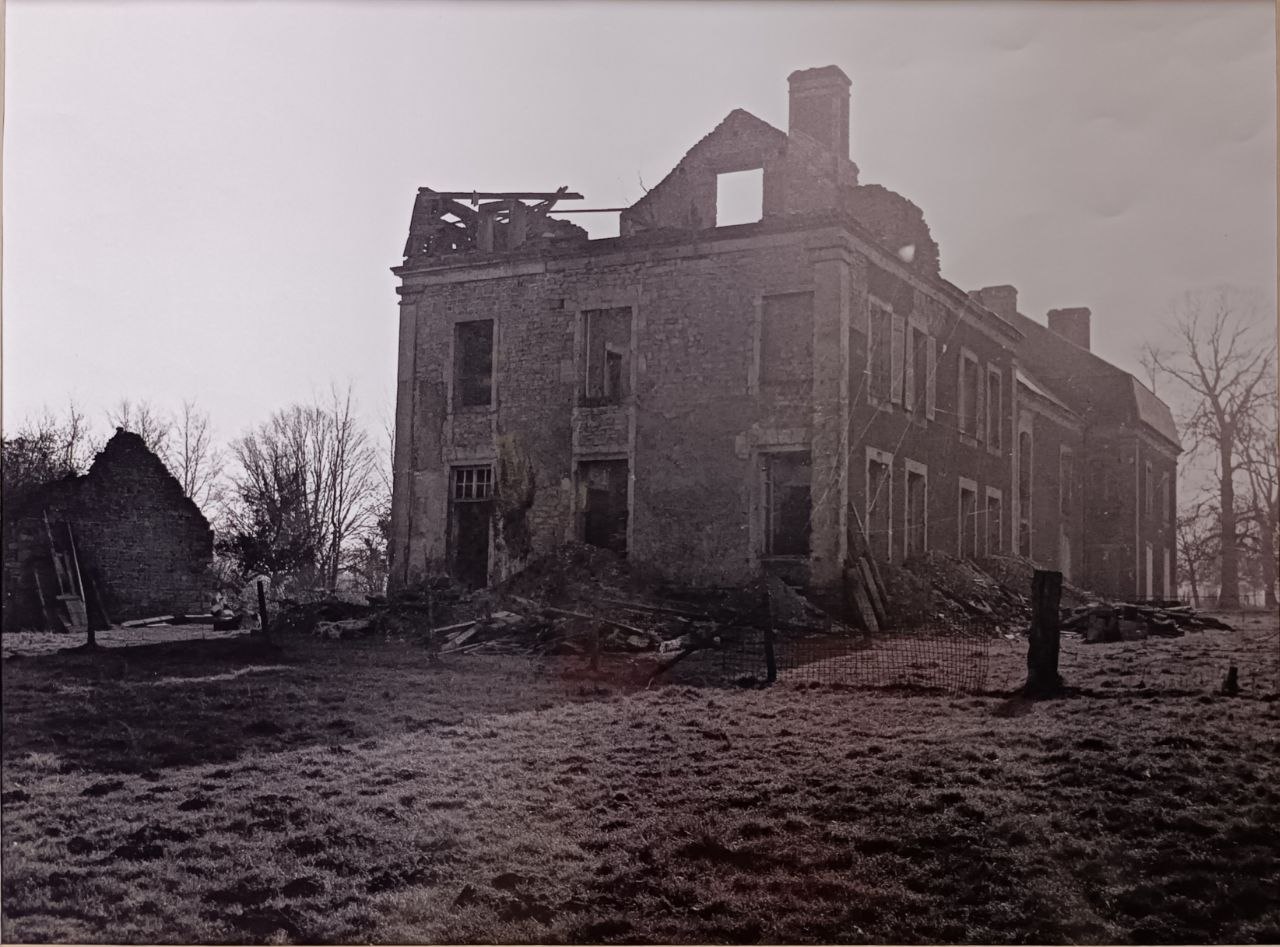
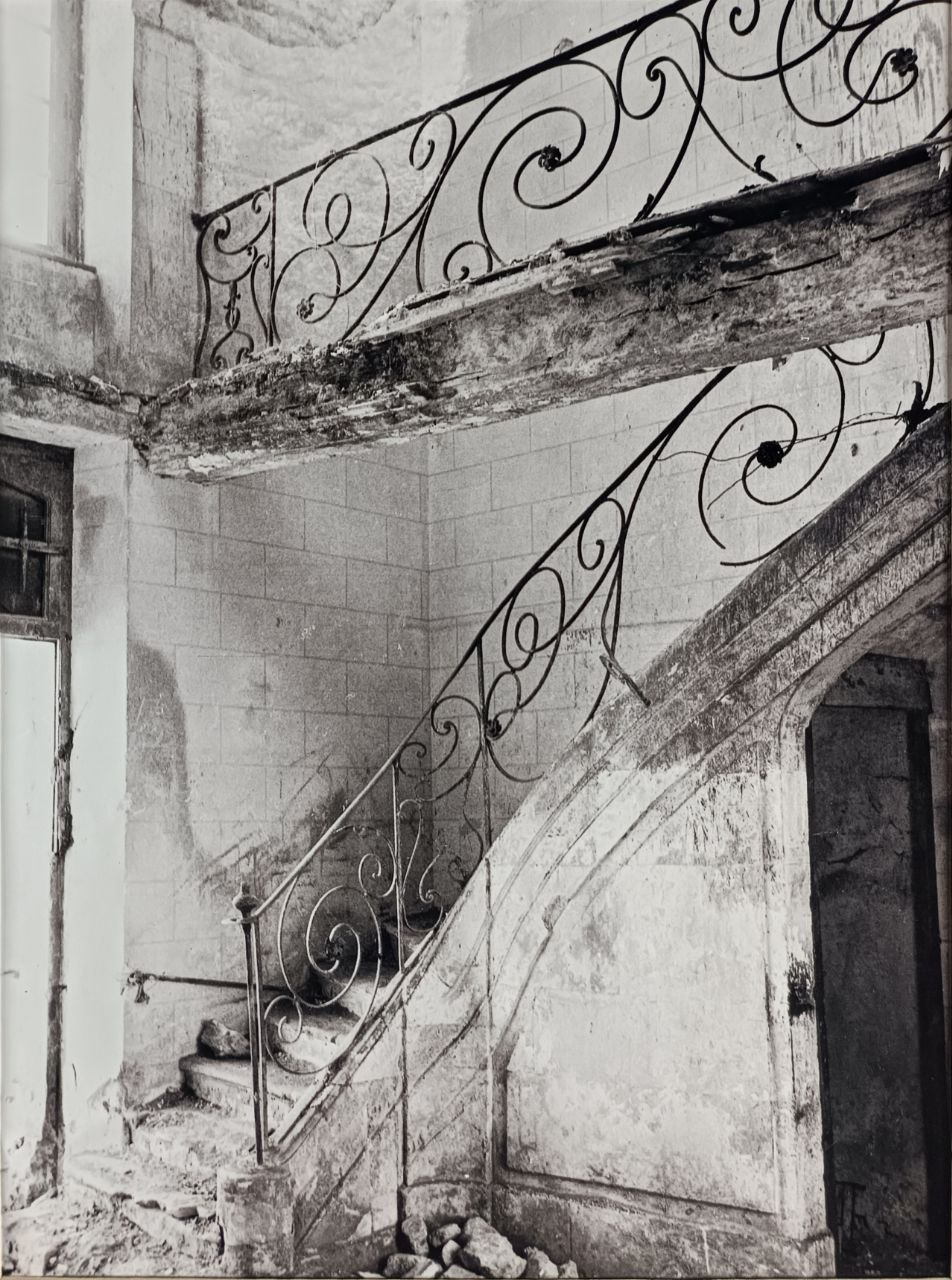
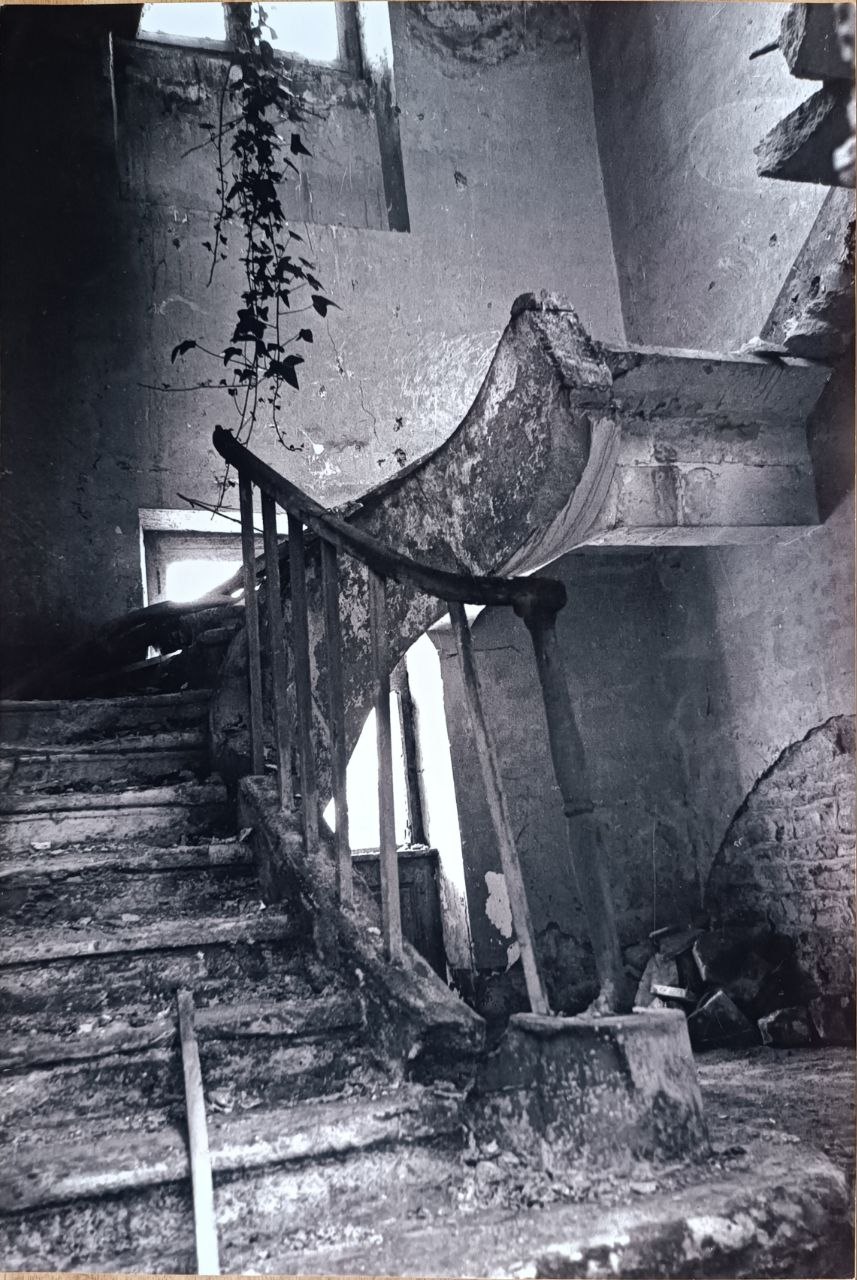
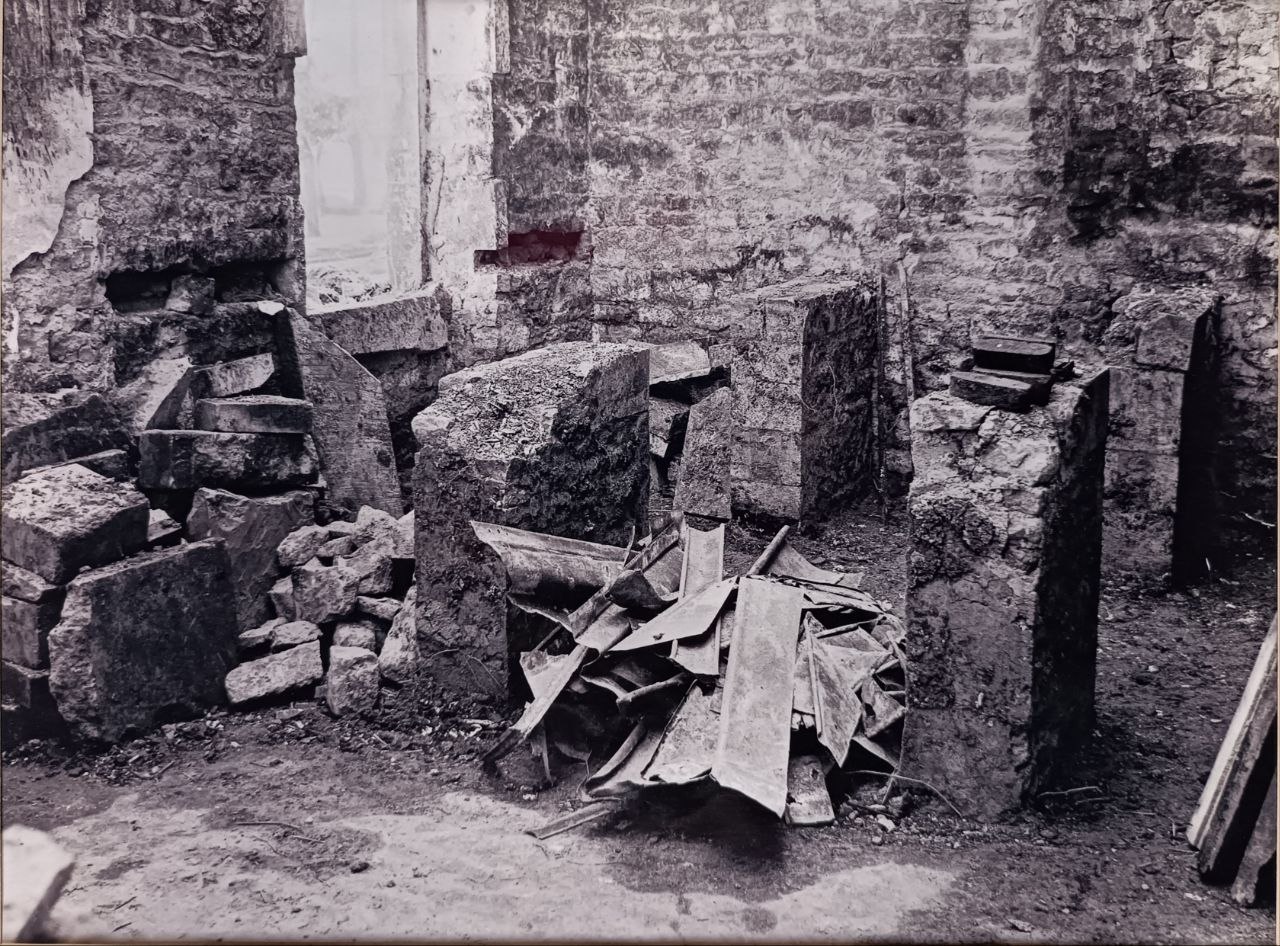
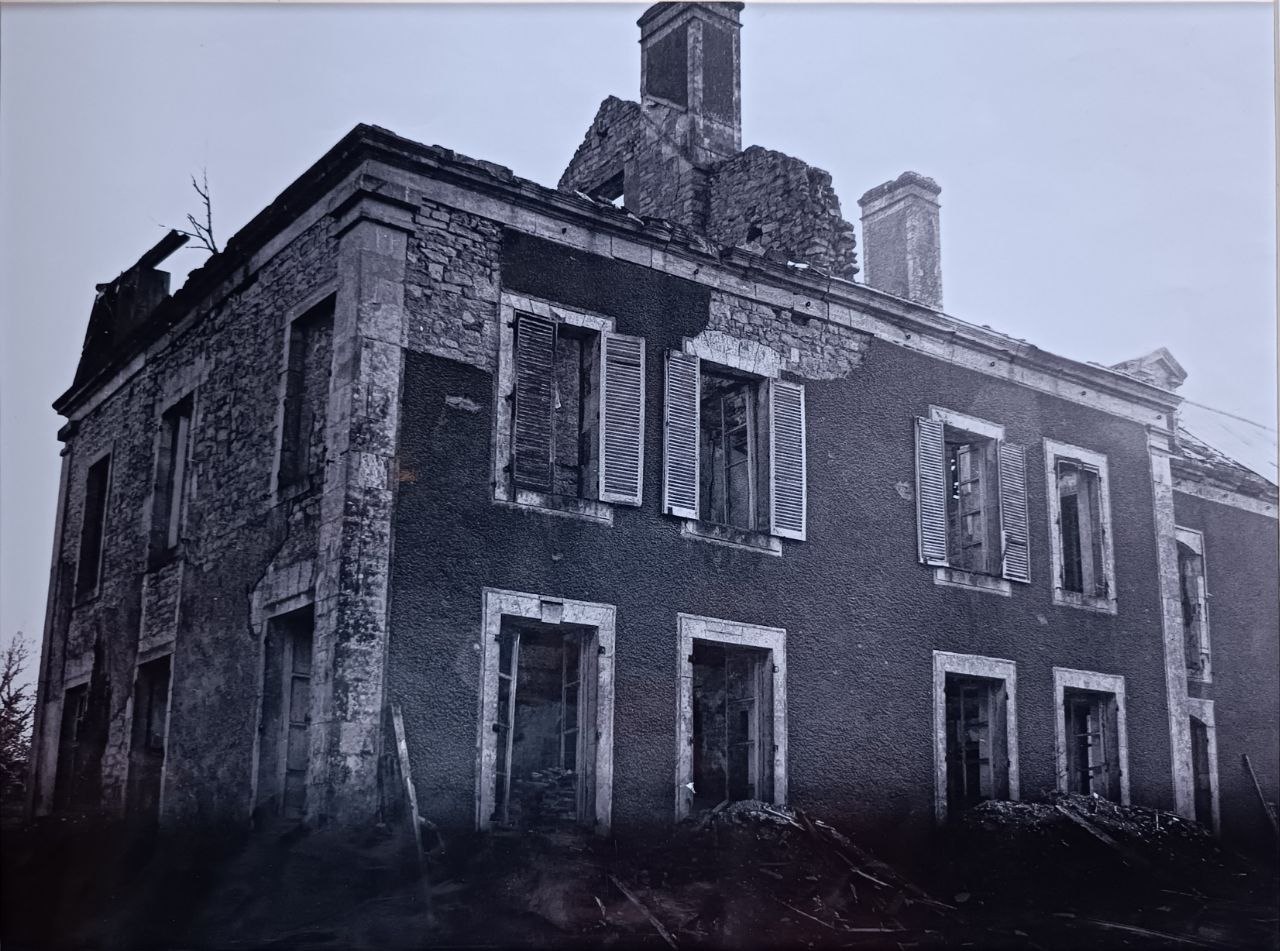
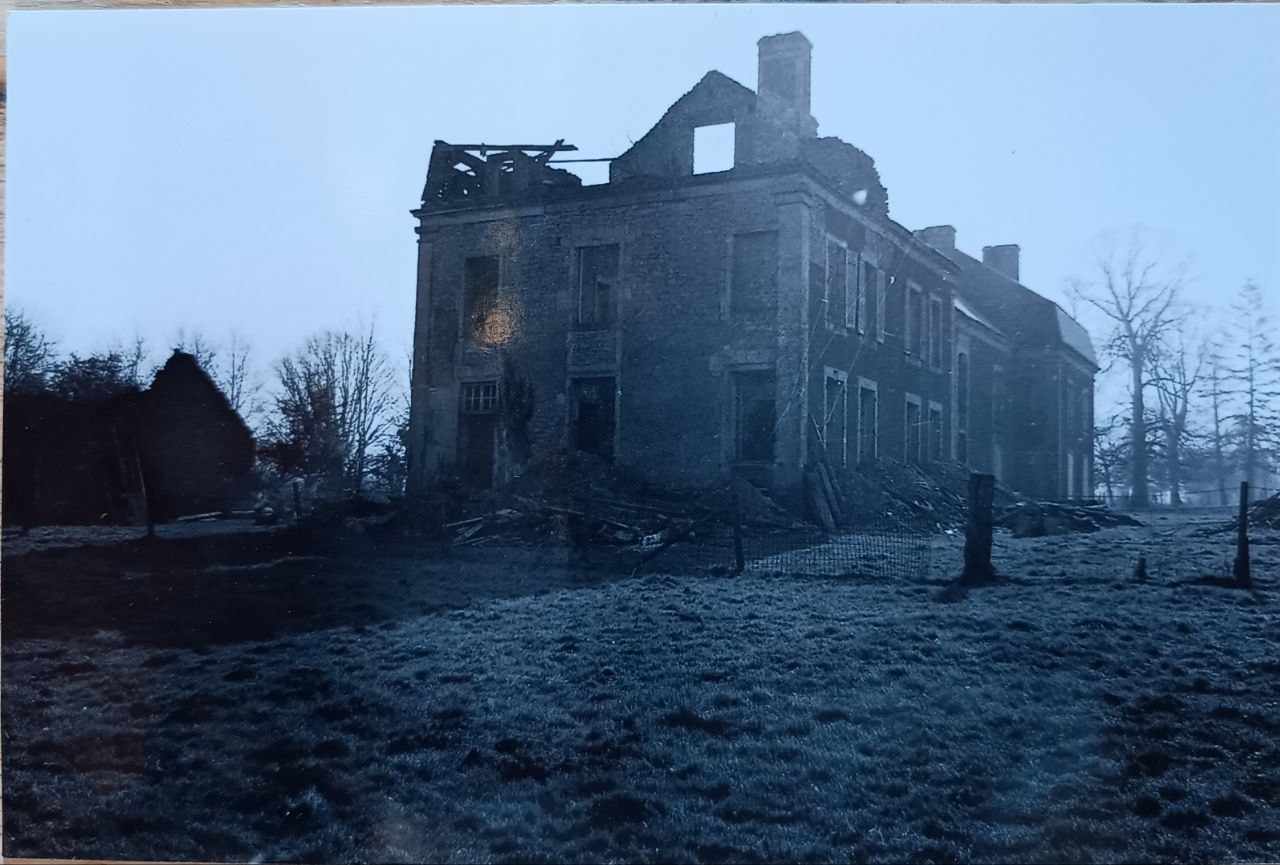
Photographs kept in the estate’s history room.
The house was occupied by the German army
Its position in the bocage lent itself to observation and to billeting officers. That is what we can say with caution, and that is all.
Which unit, on what dates, for what purpose
What we cannot yet say, and will not say until the archives have established it: which unit exactly, on what dates, and for what precise purpose. Accounts circulate in the region. An account is not a proof.
We are pursuing the research on three fronts.
-
The aerial photographs
Allied reconnaissance flights photographed this sector several times during the summer of 1944. We have examined the June images and are looking for those of the following weeks: they are the ones that would show an occupation — vehicles, tracks, works.
-
The military archives
War diaries, reports, interrogations: the documents of both sides exist, scattered across several countries.
-
The war-damage files
After the war, every owner whose property had been damaged filed a claim with the administration. The one for this house, if it survives, would describe the damage room by room.
A rule we have set ourselves
Accounts circulate, here as in every village of the bocage. Some of them are fine ones. We will not write them on this page until a document has confirmed them — because the history of a house, once printed, becomes very hard to correct.
The day we know, we will write it here.